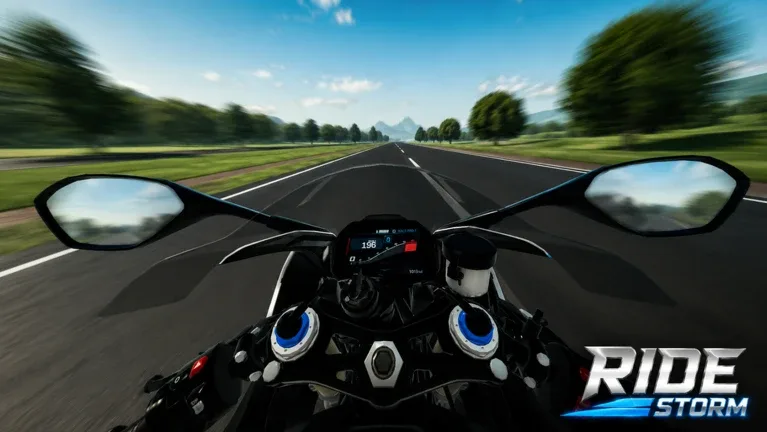
Ride Storm Deagle Dagale F4V Review: Is It Worth It?
Wondering if the Deagle Dagale F4V is worth it in Ride Storm? Discover top speed stats, upgrade tiers, and why this budget superbike dominates money farming.
Published: Ride Storm Wiki Editorial Team
Table of Contents
Verdict: Is the Deagle Dagale F4V Worth Buying in Ride Storm?
The Deagle Dagale F4V is unquestionably worth buying, particularly for new and intermediate riders looking to maximize their progression rate. In Ride Storm on Roblox, players face a roster of over 90 motorcycles ranging from casual cruisers to multimillion-dollar speed machines. While late-game hyperbikes boast staggering numbers, their steep price tags often stall player progress.
Community testing and player reviews consistently highlight the F4V as one of the most cost-efficient motorcycles in the entire catalog. It delivers near-superbike performance at an accessible entry price, allowing you to run continuous high-speed highway runs to grind in-game cash. If your goal is to bridge the gap between starter two-wheelers and top-tier speed demons, purchasing the F4V should be your top priority.
However, if your garage already holds fully tuned top-tier racing machines with sustained speeds exceeding 390 km/h, the F4V serves primarily as a stylish collectors' item. For everyone else climbing the ranks, it stands out as the ultimate money-farming workhorse.
In-Game Identity: The Ride Storm Panigale V4 Parody
Motorcycle enthusiasts will immediately recognize the distinct silhouette, aggressive fairings, and sharp tail section of the Deagle Dagale F4V (frequently cataloged in community discussions under variations like "Diagle Dali F4V"). The motorcycle is Ride Storm's stylized adaptation of the real-world Ducati Panigale V4 superbike.
Real-World Counterpart: Ducati Panigale V4
In-Game Name Variations: Deagle Dagale F4V / Diagle Dali F4V
Vehicle Category: Superbike / Sportbike
Primary Strength: High acceleration curve and excellent top-end highway velocity
The model captures the aerodynamic profile and signature stance of Italian sportbikes. Ride Storm features an expansive open-world map with long highways, tight mountain passes, canyons, and city streets. The F4V's geometry is purpose-built for high-speed open-road stability, making it an ideal platform for high-velocity cruising across long stretches of asphalt.
Performance Benchmarks: Stock vs. Full Stage 3 Tuning
To understand why the community rates the Deagle Dagale F4V so highly, it helps to examine its performance across progressive upgrade stages. Based on direct player road tests on open highway stretches, the machine exhibits noticeable performance jumps with each tier of mechanical modification.
Tuning Stage
Key Modifications Installed
Observed Top Speed
Handling Characteristics
Stock (Stage 0)
Factory Engine, Stock Plugs, Default Aero
Baseline Highway Speed
Stable, predictable throttle, low launch lift
Stage 1
Stage 1 Engine, Plugs, Aero, Anti-Wheelie
~360 km/h
Sharp acceleration spike, requires straight roads
Stage 2
Stage 2 Engine, Upgraded Plugs, Aero
~370 km/h
Rapid gear climb, noticeable wind drag resistance
Stage 3 (Max)
Stage 3 Engine, Aero, Plugs, Full Weight Reduction
386 km/h
Peak performance cap; approaches 390 km/h limit
Community benchmarks demonstrate that a fully upgraded build reliably caps out at 386 km/h. While some players test the machine hoping to breach the 390 km/h or 400 km/h barriers, road tests show that 386 km/h represents the practical ceiling on flat highway tarmac. Even with this cap, reaching 386 km/h places the F4V well above standard commuter bikes and budget sports models.
Step-by-Step Tuning Guide for the Deagle Dagale F4V
Maximizing the performance of your F4V requires configuring both raw power parts and stability assists in the garage workshop. Neglecting handling options like anti-wheelie can make high-horsepower launches unmanageable.
Install Stage 3 Engine Components:
Upgrade the core engine block to Stage 3 to maximize base horsepower output and high-RPM acceleration.
Upgrade Spark Plugs:
Equip Stage 3 spark plugs to ensure optimal throttle response throughout the mid-range power band.
Maximize Aerodynamics:
Apply Stage 3 Aerodynamic parts. Aero upgrades directly counteract top-end drag, which is essential for pushing past the 370 km/h mark on open straights.
Strip Down Weight:
Apply weight reduction packages to improve the power-to-weight ratio, allowing the bike to reach peak velocity faster.
Enable Anti-Wheelie & Check the Swingarm:
Toggle the Anti-Wheelie setting on. High-tier builds generate enough torque to throw the front wheel upward, causing high-speed crashes or missed acceleration windows.
Upgrade Brake Power to Stage 3:
At speeds over 380 km/h, stock brakes will not save you from dynamic highway traffic. Stage 3 braking power is vital for rapid deceleration before tight highway turns.
Why the Deagle Dagale F4V Excels at Money Farming
Income in Ride Storm rewards players for maintaining sustained high speeds, traveling long distances, and clearing highway stretches without wiping out. Because the economy requires cash for future vehicle purchases and tuning stages, choosing the right farming tool determines how fast you progress.
1. High Velocity per Dollar Invested
Many top-tier vehicles in Ride Storm demand enormous upfront cash reserves before you can purchase them, let alone pay for their parts. The F4V offers an accessible purchase barrier relative to its performance envelope. You do not need an endgame bankroll to acquire it and start running high-payout routes.
2. High-Speed Consistency on the Highway
Because the bike tracks smoothly in a straight line at 360–386 km/h, players can comfortably run long routes from the desert canyons to coastal highways. The faster you travel across distance checkpoints, the quicker your wallet refills.
3. Low Learning Curve
Unlike twitchy lightweight dirt bikes or hyper-responsive custom builds that snap into walls on minor inputs, the F4V possesses a planted, heavier front end when anti-wheelie is engaged. Beginners can quickly master its cornering radius and high-speed behavior.
Tip
When farming money on public or private servers, turn off ambient highway traffic in your settings if available. This eliminates sudden NPC vehicle collisions and allows you to hold 386 km/h uninterrupted for long distances.
Handling, Weather, and Environmental Challenges
Ride Storm features dynamic weather cycles, including heavy rainstorms, which actively alter road conditions. Piloting a 386 km/h superbike through wet tarmac requires adjustments in how you approach the throttle and braking zones.
Riding in the Rain
During rain events, tire traction decreases significantly across open roads. On the F4V, breaking traction while cornering above 300 km/h typically results in a slide or high-side crash. When bad weather rolls in:
Avoid aggressive steering inputs while holding wide-open throttle.
Roll off the throttle slightly before entering sweeping highway bends.
Rely on your Stage 3 brakes well before approaching intersections or tunnels.
Warning
Disabling Anti-Wheelie on wet pavement dramatically increases the chance of losing rear tire grip during full-throttle launches, sending the bike out of control before reaching sixth gear.
Parts and Configuration Checklist
Before heading onto the highway to set speed records or grind cash runs, verify that your F4V build contains all recommended parts:
[ ] Engine upgraded to Stage 3
[ ] Spark Plugs upgraded to Stage 3
[ ] Aerodynamics package upgraded to Stage 3
[ ] Brake Power set to Stage 3
[ ] Weight Reduction applied
[ ] Anti-Wheelie toggled to Enabled
[ ] Swingarm installed and verified
[ ] Traffic settings adjusted to your farming preference
Community FAQ
What is the absolute top speed of the Deagle Dagale F4V in Ride Storm?
Based on community speed runs and testing with full Stage 3 upgrades, the maximum observed top speed is 386 km/h. The bike cannot realistically hit 390 km/h or 400 km/h under standard flat highway conditions.
What motorcycle is the Deagle Dagale F4V modeled after?
The Deagle Dagale F4V (also written as Diagle Dali F4V) is inspired by the Ducati Panigale V4, mirroring its aggressive sportbike fairings, intake structure, and aerodynamic styling.
Should beginners buy the F4V or save up for an endgame hyperbike?
Beginners should almost always buy the F4V first. Trying to save for an endgame hyperbike on slow starter bikes takes significantly more time. The F4V's high speed allows you to farm the cash required for endgame bikes in a fraction of the time.
Does the exhaust update change the F4V's performance?
Ride Storm frequently updates exhaust systems and audio profiles across vehicle classes. While custom exhausts offer distinct sound signatures and aesthetic finishes, your core top-speed performance remains tied primarily to engine, plug, and aero tuning tiers.