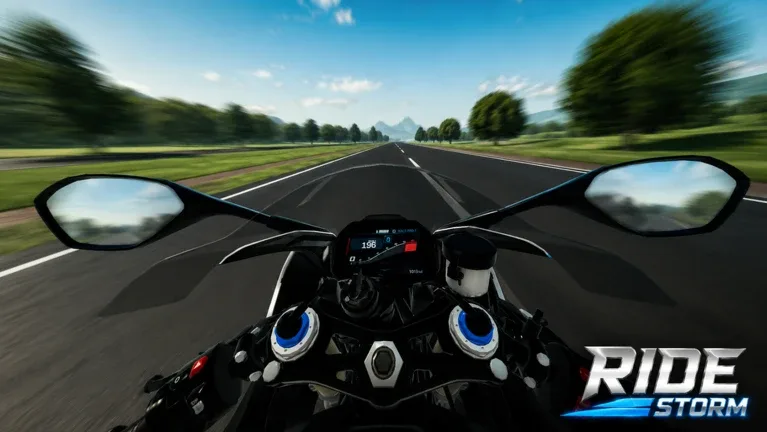
Ride Storm Roblox Guide: Mastering Bike Racing and Mechanics
Discover how to navigate the high-speed tracks in Roblox's Ride Storm. Learn essential bike mechanics, racing tips, and gameplay strategies to dominate the circuit.
Published: Ride Storm Wiki Editorial Team
Table of Contents
Understanding the Ride Storm Experience
Ride Storm is a competitive bike racing title available on the Roblox platform. Unlike static simulations, this experience focuses on the visceral feel of speed and precise control. Whether you are a newcomer just getting your first bike or a seasoned racer aiming for the top of the leaderboards, understanding the physics and mechanical nuances of the game is essential for success.
It is important to clarify that "Ride Storm" in the context of Roblox is a distinct digital racing experience. While search results may occasionally reference physical hobby products like the "Bandai Baraba Ride Starter Set," these are unrelated to the software provided on the Roblox platform. By focusing on the official Ride Storm Roblox universe, you ensure that your strategies remain relevant to the game's actual physics engine and update patches.
Essential Bike Handling Mechanics
Mastering the Drift: Learn to initiate drifts before tight corners to maintain momentum rather than braking hard.
Throttle Control: Avoid constant full-throttle on uneven terrain, as this can lead to loss of traction.
Camera Positioning: Use third-person view for better situational awareness during pack racing.
Winning in Ride Storm is rarely about raw top speed; it is about maintaining your momentum through the track’s most challenging sections. Advanced players emphasize that "corner entry" is the most critical phase of any race. If you enter a turn too fast, you will likely overshoot the apex, losing precious seconds as you try to realign your bike.
Community reports consistently highlight that leaning into turns is a subtle but vital skill. By timing your input to match the bike's banking angle, you can carry more speed through corners than opponents who steer exclusively with directional keys. Experiment with sensitivity settings in the game menu to find a balance that allows for sharp inputs without causing instability.
Optimization and Racing Strategy
To climb the rankings, you must adapt your approach based on the specific track layout. Some circuits favor high-acceleration bikes that excel in stop-and-go environments, while others require high top-end speed for long straightaways.
Tip
Always check the post-race telemetry if the game provides it. Understanding where you lose the most time—whether it’s cornering speed or acceleration—will help you refine your racing line in future attempts.
Strategy also involves observing the racing lines of top players. Watch how they avoid collisions during the start of the race; the first corner is often a bottleneck where collisions can derail your entire run. Playing defensively during the initial seconds—choosing a wider line to avoid the pack—can often provide a safer path to the front once the field spreads out.
Managing Your Gear and Upgrades
As you accumulate currency through successful race finishes, you will be faced with choices regarding upgrades. It is tempting to dump all your resources into "Top Speed," but veteran players warn that this is a common rookie mistake.
Handling Upgrades
These parts improve your bike's response time. Highly recommended for technical tracks with frequent direction changes.
Acceleration Kits
Essential for tracks with short straights and many corners. They help you regain lost speed quickly after braking.
Aerodynamic Parts
These offer diminishing returns at low speeds but are vital for reaching your peak performance on long, open highway sections.
Balance is key. A bike that is fast on a straight line but cannot navigate a curve is essentially useless. Aim for a "B-tier" balance of speed and handling before pursuing high-level specialized parts. If you find yourself consistently finishing behind, look at your bike's tire grip stats; poor grip is often the hidden culprit behind frequent spin-outs and sliding during high-speed turns.
Navigating Common Challenges (FAQ)
Is the Storm Falcon bike related to this game?
No. References to "Storm Falcon" or "Baraba Ride" sets typically refer to physical toy or model kits and have no functional connection to the Roblox game. Always use the official game link to ensure you are interacting with the correct digital assets.
How can I improve my lap times?
Focus on "lapping cleanly" rather than "lapping fast." Avoiding wall collisions and off-track excursions will lower your average lap time more effectively than attempting risky, high-speed maneuvers that lead to crashes.
Does ping affect my racing performance?
Yes. High latency can cause "rubber-banding," where your bike appears to teleport or jitter. If you experience this, try connecting to a server region closer to your geographic location to stabilize your connection and ensure your inputs are registered accurately.
Community Tips for Future Progression
Participating in community discussions via social hubs or Discord servers can provide insights into seasonal events. Ride Storm occasionally introduces limited-time challenges or track updates that drastically change the meta. Keeping an eye on the official game page for update logs is the best way to stay informed about balance changes that might affect your bike's performance.
Remember that improvement in Ride Storm is cumulative. Do not get discouraged by early losses. Take the time to practice on individual track segments in free-play mode before entering competitive lobbies. By isolating each turn and perfecting your pathing, you will build the muscle memory required to consistently place on the podium.